Showing posts with label CRM. Show all posts

Data integration is important for every business model: A structural analysis:

Data integration is a one of the salient feature of data ware housing. From this article we know about How data profiling and analysis saves companies $ Millions. Taking charge of organizational data to create a faster, smarter more competitive enterprise by improving data Quality, cutting integration costs and improving the returns from data warehousing initiatives, ERP, CRM, SCM and Business Intelligence.

If senior executives can recognize the value of data, then they can give support to information managers to take control of data. The place for information managers to start is by seeking to better understand the organization’s data: its content, location, structure, quality and suitability for integration with other data in information management projects.

Automated data profiling and analysis solutions have recently made understanding and managing data much more accessible. Data analysts, information managers and senior executives can now take control of data as an asset and work together to maximize returns from across all data-dependent systems—from Customer Relationship Management (CRM) and Supply Chain Management (SCM) to Data Warehousing, Enterprise Resource Planning (ERP) and Business Intelligence (BI).

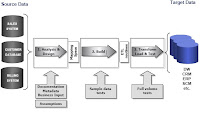
The steps involved in data integration:
The impact of poor data quality on data integration projects:

Until quite recently, few organizations had any information quality function or team charged with the responsibility of ensuring data quality across the enterprise in a strategic or holistic fashion. Data quality was seen as a specific tactical element of implementing a new application, or worse, not even considered at all.

Courtesy: Trillium Software, a division of Harte-Hanks

“In our CRM project, data integration was a secondary consideration for us. We didn’t accurately estimate the time it would take us to integrate the data until it was too late.”

—Project manager, major international bank

Ford Financial Europe sought to integrate business intelligence information with a US-based Enterprise Data Warehouse.

Lead management system for corporations:

For every business module requires the management team in order to provide the service to the concern. The one of growing management system is rel="nofollow">lead management is the process of rapidly and effectively creating, nurturing, distributing and analyzing leads. The ultimate goal? To increase the likelihood that a lead will convert to a qualified opportunity and then a new, satisfied customer.

Lead management system increasing the corporate revenue.

The leads can be promote in two ways

1. Lead seller: Generating revenue across selling of leads

2. Lead buyer: Buy the leads in order to create the revenue.

By using lead management software we can process

1. Track closed sales

2. Leads generated

3. Advertising campaigns

4. Website traffic and more

By using the lead management software we can also determine the factors which are helps to growth our business needs.This is a sponsored post for Lead management system

Date: 5/15/07


Theory of Customer relationship management (CRM):

For every business trends needs good relationship with Customers in the sense the management field develops CRM (Customer relationship management) is a broad term that covers concepts used by organizations and It is a strategy used to learn more about customers' needs and behaviors in order to develop stronger relationships with them. Customers some times clients are the main heart of the business. Now a days CRM is most powerful tool for corporate like customer relationship management.

AIMpromote is setting new standards in online sales management software and is changing the way that businesses are managing their sales teams. With business intelligence product SAP, Oracle and many more organization is competitor on the technological way. The main goal of CRM is the idea of CRM is that it helps businesses use technology and human resources to gain insight into the behavior of customers and the value of those customers. With an effective CRM strategy, a business can increase revenues by

1. Providing services and products that are exactly what your customers want

2. Offering better customer service

3. Cross selling products more effectively

4. Helping sales staff close deals faster

5. Retaining existing customers and discovering new ones

For more details about CRM will be labeled under CRM readers can click and read full details about Customer Relationship Management.

Angel Investors